Homemade for Less: 7 Everyday Staples Worth Making Yourself
There is a seductive little promise hiding behind almost every homemade recipe: make it yourself and save money.
Sometimes that is true. Sometimes it is very true.
And sometimes, after buying twelve ingredients, dirtying half the kitchen and spending an hour producing something that cost $1.50 at the supermarket, you begin to wonder whether the maths has gone missing somewhere between the mixing bowl and the washing-up.
That is why I have become a little more selective.
I love making food from scratch, but I am not interested in turning every supermarket purchase into a domestic endurance event. I work full time, life is busy and convenience still matters. The aim is not to make absolutely everything myself. The aim is to work out which things are genuinely worth the effort.
For me, the sweet spot is where cost, taste, convenience and control meet.
If something is cheaper to make, tastes better, is easy enough to repeat and lets me control what goes into it, that is usually a keeper.
So, after plenty of experimenting with my Thermomix®, these are seven everyday staples I think earn their place on the homemade list.
1. Yoghurt: worth it if you eat a lot of it
Yoghurt is one of those supermarket items that quietly drains money because it is so easy to buy.
A kilo can cost around $7.50, and if you are using yoghurt for breakfasts, snacks, sauces and cooking, it disappears surprisingly quickly.
Homemade yoghurt can work out considerably cheaper because the main ingredient is milk, with a small amount of yoghurt or starter culture to begin the batch.
The savings become more noticeable if yoghurt is something your household gets through regularly.
This is where volume matters.
If you eat one tiny tub every fortnight, homemade may not be worth the bother. But if yoghurt is a regular guest at breakfast, lunch and snack time, then making a full batch starts to make much more sense.
It also gives you control over sweetness, flavour and texture.
For me, that is the recurring theme with homemade food: the savings are welcome, but the ability to choose what goes in is often just as valuable.
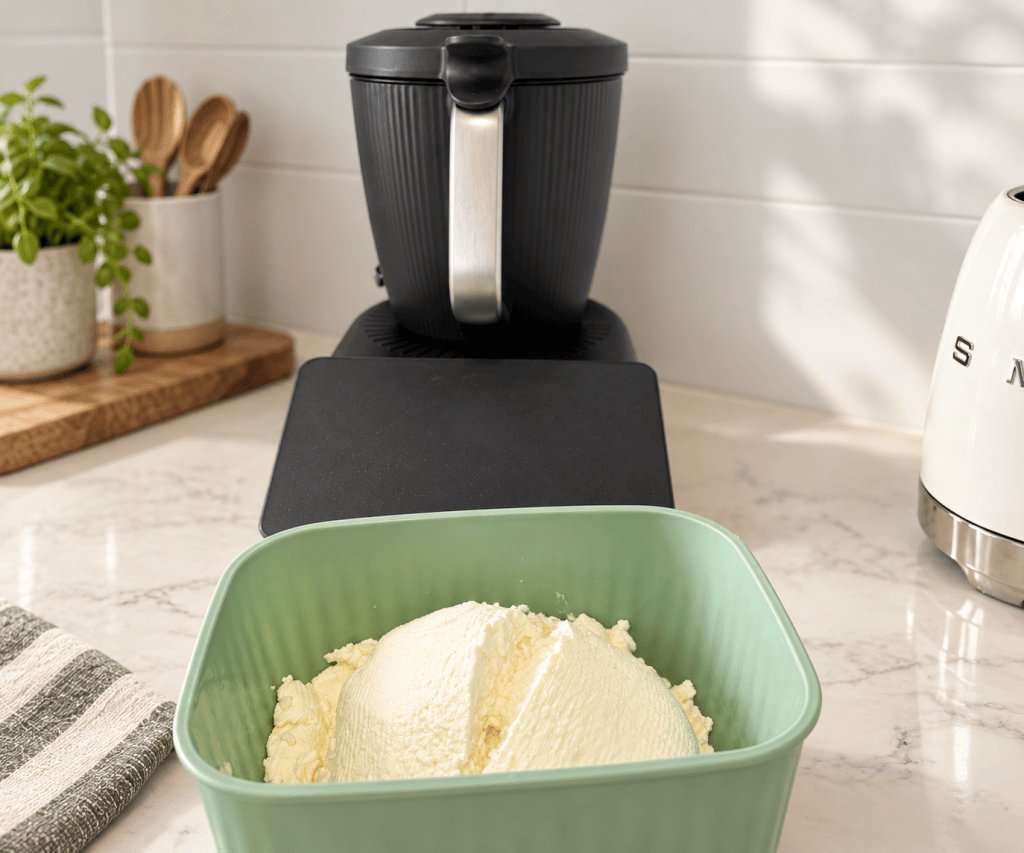
2. Pizza dough: one of the easiest wins
This one barely needs a sales pitch.
A supermarket pizza dough ball can cost around $2 each, and if pizza night means two or three bases, the price climbs quickly.
Homemade pizza dough is built from some of the cheapest ingredients in the pantry: flour, yeast, water, salt and perhaps a little oil.
The Thermomix® handles the kneading, which removes the part that often makes homemade dough feel like work.
That changes the equation completely.
Without kneading, pizza dough can feel like an extra project. With the TM7 doing the hard labour, it becomes a few minutes of measuring followed by waiting for the dough to rise.
The result is cheaper, fresher and usually far better than a packaged dough ball.
This is one of those swaps where the maths and the taste agree with each other, which is always helpful.
3. Breadcrumbs: almost free if you use what you have
Breadcrumbs are probably one of the best examples of turning waste into something useful.
That heel of bread nobody wants? The slice that has gone a little dry? The end of the loaf that is one day past its sandwich prime?
That is not rubbish. That is breadcrumbs waiting for a career change.
Instead of buying a packet, I can blitz leftover bread into crumbs and store them for later.
There is something enormously satisfying about that because the saving comes from using something that might otherwise have been thrown away.
It is less about the supermarket price and more about getting full value from the food I have already paid for.
Food waste is money waste, and breadcrumbs are one of the simplest ways to rescue both.
4. Dips: where homemade wins on flavour
Dips are one of those products that seem inexpensive until you add two or three tubs to the trolley.
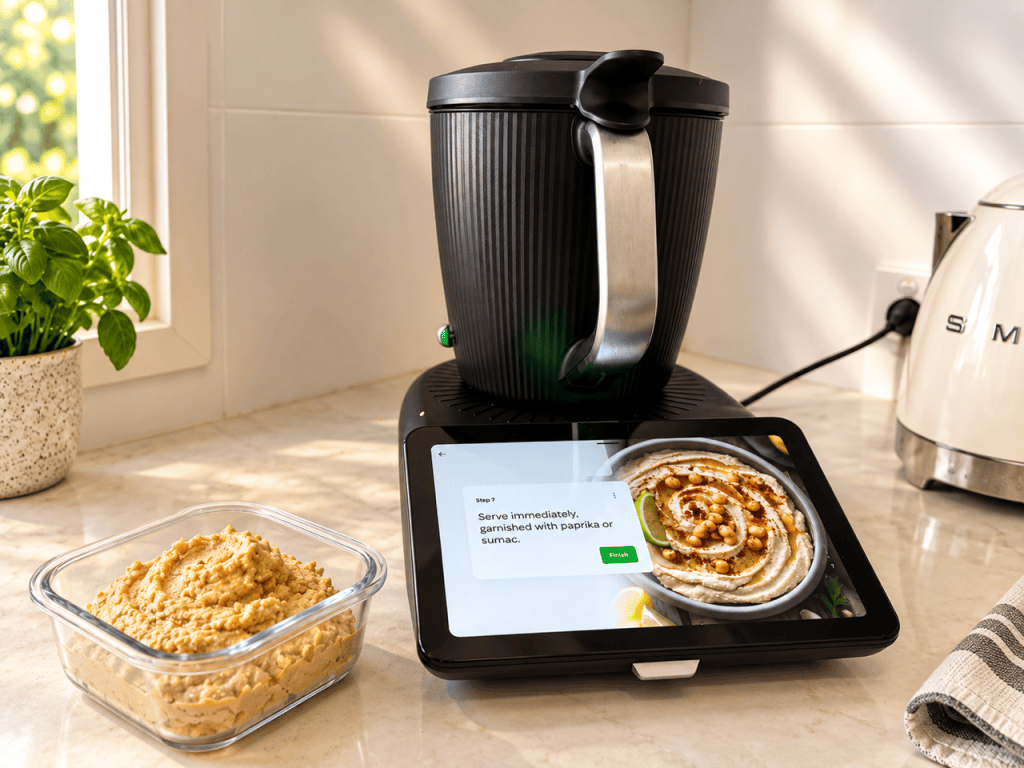
Hummus, beetroot dip, tzatziki, roasted capsicum dip — individually they may only be a few dollars, but those few dollars have a habit of travelling in packs.
Homemade dips are often built from inexpensive ingredients such as chickpeas, yoghurt, herbs, vegetables, tahini, lemon and garlic.
And the Thermomix® turns them into something smooth in seconds.
This is one of the categories where I think homemade wins as much on taste as it does on price.
A fresh dip has a brightness that can be lost in a tub designed to sit in a refrigerator for weeks.
You can also adjust it. More lemon, less salt, extra garlic, more herbs.
The dip becomes yours rather than something designed for the average supermarket shopper.
And there is a certain pleasure in putting a bowl on the table and knowing it came from ingredients you already had.
5. Salad dressing: one of the most overlooked savings
Salad dressing has perfected the art of looking harmless.
One bottle here, another bottle there, perhaps a creamy one and a vinaigrette because variety is the spice of life.
Before long, the refrigerator door resembles a small condiment convention.
But salad dressing is one of the easiest things to make yourself.
Oil, vinegar or lemon juice, mustard, herbs, garlic, perhaps a little honey or yoghurt — ingredients many of us already have.
The cost per batch can be tiny compared with a bottled dressing, especially when you are using pantry basics. And this is where homemade starts to feel almost embarrassingly easy.
The Thermomix® can blend and emulsify the dressing quickly, and I can make only the amount I need.
No half-finished bottle quietly expiring behind the milk. No buying another dressing because I forgot what was already there. Just enough, made fresh.
6. Stock paste: small jar, big value
This is one of my strongest homemade staples.
Store-bought chicken or vegetable stock can cost around $4.50 for 112 g, and if you cook regularly, it is astonishing how quickly you get through it.
Homemade stock paste is different because one batch can last for quite some time, depending on how often you use it.
It also has another advantage: it turns odds and ends into something genuinely useful.
Vegetables, herbs, garlic, onion — ingredients that may otherwise languish in the crisper drawer can suddenly become the foundation of soups, risottos, sauces and casseroles.
I like that.
It feels economical in the best possible way. The value is not just in what you avoid buying; it is also in what you stop wasting.
A jar of stock paste is essentially the kitchen equivalent of getting every last kilometre out of the tank.
7. Flavoured butter: expensive to buy, ridiculously easy to make
Flavoured butter is a perfect example of a product that can feel luxurious in the supermarket but is surprisingly simple at home.
Garlic butter, herb butter, chilli butter, honey butter — the combinations are almost endless. And if you are already buying ordinary butter, the extra cost of transforming it is often little more than herbs, garlic or spices.
The markup on pre-made flavoured butter can be significant because you are paying for convenience, packaging and a finished product.
At home, you can make only what you need. You can portion it. Freeze it. Use it on steak, vegetables, bread, corn, pasta or whatever else needs a little help.
This is one of those staples where homemade feels disproportionately impressive compared with the effort involved.
Five minutes of work, and suddenly dinner looks as though it has aspirations.
So, when is homemade actually worth it?
For me, homemade is worth the effort when at least two or three things line up.
It should save money, taste better, reduce waste, use ingredients I already have, or give me more control over what we are eating.
If it does none of those things, I am quite happy to buy it.
That is the part I think gets lost in the enthusiasm around scratch cooking. Not everything needs to be homemade. Some products are cheap, convenient and perfectly good as they are.
The goal is not to make life harder in pursuit of an ideal.
The goal is to make life easier, cheaper and more enjoyable where it makes sense.
There is a kind of irony in spending hours making something purely to prove you can make it.
That is not the version of from-scratch cooking I am interested in. I want homemade to earn its place.
The real savings are in the repeat purchases
A single batch of breadcrumbs will not change your grocery budget.
Neither will one pizza base. But the grocery bill is rarely built from one big dramatic purchase. It is built from repetition. The $4 bottle. The $5 tub. The $7 yoghurt. The $2 dough ball.
Buy them once and they are barely noticeable. Buy them every week and they start to tell a different story.
That is why the small staples matter. They are the quiet repeat offenders. And once you replace even a handful of them with homemade versions, the difference begins to accumulate.
Not overnight. Not dramatically. But steadily.
Start with the easiest swap
If you are new to making things from scratch, I would not start with yoghurt, stock paste, dressing, dips, bread and everything else all at once.
Pick one.
Pizza dough is a great place to begin because the savings are obvious and the process is simple. Breadcrumbs are even easier because they turn waste into something useful. A salad dressing can take less time to make than it takes to stand in the supermarket comparing labels.
Start with the thing that feels least like work. Then repeat it.
That is how a homemade habit becomes part of normal life rather than a short-lived burst of enthusiasm.
Less buying, more choosing
The biggest change for me has not been that I stopped buying everything. I haven’t.
The change is that I no longer automatically assume that buying is the easiest option. Sometimes the easiest option is already sitting in the pantry.
Sometimes the cheapest option is five minutes away in the Thermomix®. Sometimes the tastiest option begins with ingredients I already own. And sometimes the supermarket version still wins.
That is fine too.
Homemade does not need to be a rule. It can simply be another choice. And when that choice saves money, reduces waste, tastes better and gives me more control over what we eat, it is one I am very happy to make.
I’d love to know…
What is one staple you now make instead of buy?
And if you are just starting out, which one of these seven would you be most likely to try first?
I would love to know what has earned a permanent place in your homemade rotation.
Want to know more about the Thermomix® TM7?
I’m Nicole, a Thermomix® consultant in Australia, and I’m always happy to answer questions, share ideas and help you discover more ways to use your Thermomix®.
If you’d like more information about the Thermomix® TM7, a demonstration in person if you live on the Central Coast, NSW, or virtually Australia-wide, recipes, or advice on how it might fit into your home or travelling setup, I’d love to hear from you.
You can contact me using the Contact button on the blog homepage; click the Instagram or Facebook buttons at the bottom of the blog page to get in touch via Messenger or social media.
Ready to Buy a TM7
If you’ve been thinking about bringing a Thermomix® TM7 into your kitchen, you can order yours directly through me. From quick weeknight dinners and fresh bread to sauces, yoghurt, meal prep and so much more, it’s one appliance that earns its place on the bench.
Ready to get started? Click below to order your Thermomix® TM7.
BUY YOUR TM7 NOW


Leave a Reply